
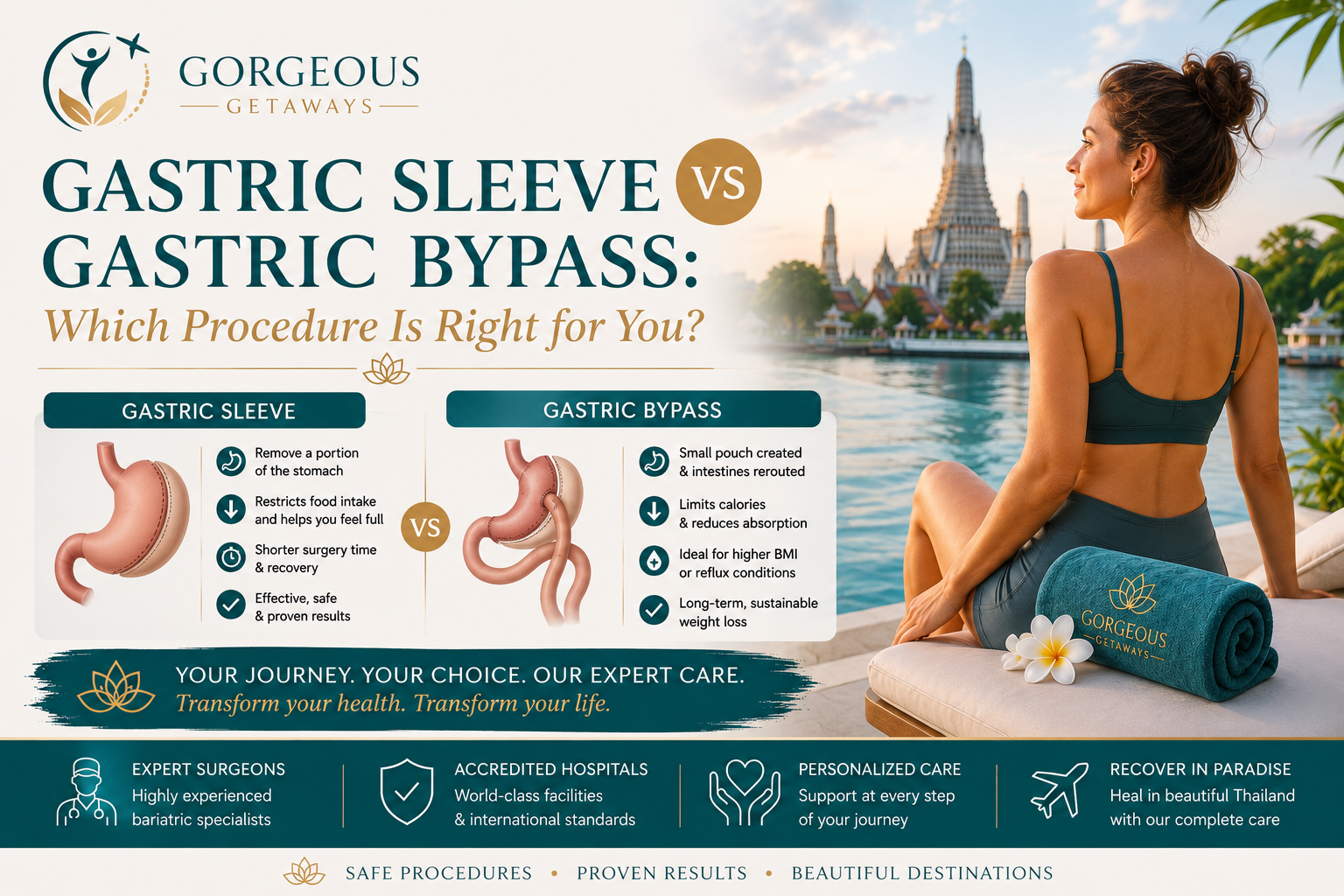
If you’re considering weight loss surgery, you’ve likely come across two names more than any others: gastric sleeve and gastric bypass. Both are established, effective bariatric procedures, and both are performed to a high standard at accredited hospitals across Malaysia and Thailand. But they work differently, suit different patients, and come with different recovery experiences.
This guide won’t tell you which one to choose. Only a qualified bariatric surgeon can do that after reviewing your health history. What we hope to do is give you a clearer picture of each procedure so you feel more confident going into those conversations.
How Each Procedure Works
The gastric sleeve (also called sleeve gastrectomy) involves removing roughly 75 to 80 percent of the stomach, leaving a narrow, sleeve-shaped pouch. This limits how much food you can eat and also reduces levels of ghrelin, the hormone that drives hunger. It’s a single-stage procedure with no rerouting of the digestive tract.
The gastric bypass (Roux-en-Y gastric bypass) is more complex. The surgeon creates a small stomach pouch and then connects it directly to the small intestine, bypassing a large section of the stomach and upper intestine. This reduces both how much you can eat and how much your body absorbs, and it tends to produce strong hormonal changes that can improve conditions like type 2 diabetes relatively quickly.
The American Society for Metabolic and Bariatric Surgery offers a thorough overview of both procedures if you’d like to explore the clinical detail further.
What to Expect During Recovery
Both surgeries are performed laparoscopically in most cases, which means smaller incisions and a faster recovery than open surgery. Most patients spend two to four nights in hospital and are advised to allow four to six weeks before returning to desk work, with longer rest periods before any strenuous activity.
The first few weeks involve a staged diet, moving from clear liquids to pureed foods and eventually to soft solids. You will need to take vitamin and mineral supplements long-term after either procedure, and ongoing follow-up with a dietitian is an important part of the process.
Bypass patients may experience something called dumping syndrome if they eat high-sugar or high-fat foods, which can feel unpleasant but also reinforces helpful dietary habits. The Mayo Clinic has a helpful patient-facing explanation of what gastric bypass involves and what side effects to be aware of.
Questions Worth Asking Your Surgeon
Before committing to either procedure, here are some questions that can help guide a productive consultation:
- Based on my BMI, health history, and any existing conditions, which procedure do you recommend and why?
- Do I have any conditions such as severe reflux or type 2 diabetes that might make one option more suitable?
- What are the risks specific to my situation?
- What does the post-operative follow-up process look like, both here in Malaysia and once I return home?
- What support is available if I experience complications after I travel back?
Why Malaysia or Thailand?
Malaysia and Thailand have both earned a strong reputation as a medical travel destination, with a number of hospitals holding international accreditation and bariatric teams with extensive experience treating patients from around the world. The country combines high clinical standards with genuine affordability, and the standard of care at leading facilities is consistently well-regarded. At Gorgeous Getaways, we have been helping patients access quality care abroad since 2004, and we only work with hospitals and surgeons we trust.
As you research, it’s also worth familiarising yourself with general guidelines on obesity and weight management from the World Health Organization, which can help frame the broader health context of your decision.
Ready to Take the Next Step?
Whether you’re just starting to explore your options or you’re ready to move forward, we’re here to help. You can request a free quote to get a clearer picture of costs and what’s included, or if you’d prefer to talk things through first, you’re welcome to book a free consultation with our patient care team. There’s no pressure and no obligation. We’re just here to help you make the decision that’s right for you.





Leave A Comment